Home / Product / Synthetic Fiber Cement Pipes

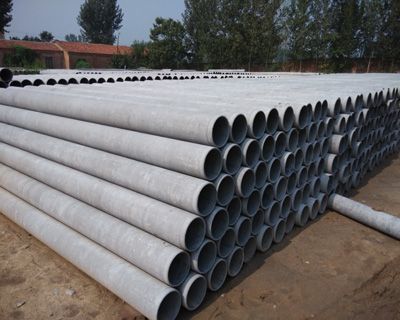
This pipe material boasts core advantages of corrosion resistance and lightweight crack resistance, making it an eco-friendly solution to replace asbestos-cement pipes and some metal pipes. It is suitable for applications with moderate loads and high corrosion risks.

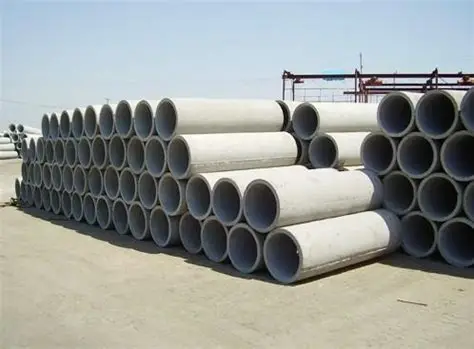
Synthetic fiber cement pipes are composite pipes made from cement as the base material, reinforced with synthetic fibers such as polypropylene (PP), polyvinyl alcohol (PVA), or nylon. Their main characteristics are:

Lightweight and high-toughness: lighter than traditional pipe materials, with superior crack resistance and impact resistance compared to plain concrete pipes.

High corrosion resistance: Exhibits excellent resistance to acids, bases, salts, and other chemical media, as well as to corrosion by electrical currents. Suitable for use in environments with corrosive soil or industrial wastewater.

Durability and moisture resistance: Synthetic fibers do not absorb moisture or mold, and their performance remains stable in humid environments.

Insulating and flame-retardant: non-conductive, excellent flame-retardant properties, commonly used for cable protection.

Performance

Excellent resistance to chemical corrosion.
The synthetic fibers themselves are resistant to acids, bases, salts, and electrochemical corrosion, making the pipes particularly suitable for use in highly corrosive environments such as industrial wastewater, chemical media, seawater, saline soils, and other such environments. They have a long lifespan.

Lightweight and excellent mechanical properties.
It has a lower density than asbestos or steel fiber cement pipes, making it easier to transport and install. The fibers form a three-dimensional, randomly oriented support within the matrix, significantly enhancing its crack resistance, impact resistance, and toughness. Its bending strength is superior to that of plain concrete.

Excellent durability.
The fibers do not mold or absorb moisture, and their performance remains stable under dry-wet cycles. They have strong resistance to freeze-thaw cycles. The material is an inorganic-organic composite, which does not degrade easily and has a long design lifespan.

Excellent physical properties.
Insulation and flame retardance: Non-conductive, excellent flame-retardant properties, making it an ideal protective tube for cables.
Low thermal conductivity: heat transfer is slow, making it suitable for certain scenarios requiring insulation.
Smooth surface: Hydraulic frictional resistance is low, which is beneficial for fluid transportation.

Environmental protection and ease of construction.
It is completely free of asbestos and is eco-friendly and safe. The pipes can be cut and drilled, making on-site processing convenient. The joints typically use rubber grommets for insertion, which allow for quick installation and reliable sealing.

Application

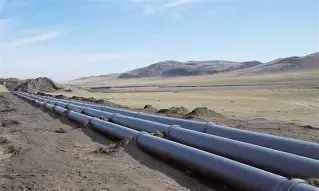
Industrial wastewater discharge and the transportation of corrosive media.

Power cable protective tubing.

Building drainage and ventilation ducts.

Agricultural irrigation and municipal drainage.

Specifications

Typical Specification Parameters

Parameter Common Range Description & Features
1. Nominal Inner Diameter (DN) DN100 – DN2000 mm
(Custom sizes available beyond this range)
Wide coverage. Small to medium diameters (≤DN600) are most common for cable protection and building drainage; large diameters are often used for industrial wastewater or municipal drainage.
2. Effective Length 2 m, 3 m, 4 m (standard)
Custom lengths per project needs
Standard lengths facilitate transport and installation. Non‑standard lengths can be customized for special projects.
3. Pressure Rating Gravity Flow (Non‑pressure) – Low Pressure (≤0.6 MPa) A typical medium‑ to low‑pressure pipe. Its strengths lie in corrosion resistance and crack resistance, not high‑pressure capacity. Pressure‑bearing performance depends on fiber dosage and wall‑structure design.
4. Fiber Parameters Type: Polypropylene (PP), Polyvinyl Alcohol (PVA), Aramid, etc.;
Dosage: Volume dosage 0.5% – 2.0%
Core performance variable. PP fibers offer good cost‑effectiveness and chemical resistance; PVA fibers provide excellent reinforcement and toughening; Aramid fibers are used for ultra‑high strength or temperature‑resistant applications.
5. Joint Type Plain end + matching coupling/sleeve;
Bell‑and‑spigot + rubber gasket seal (most common);
Flanged joint (for equipment connection).
Bell‑and‑spigot flexible joints are widely used for easy installation and reliable sealing.
6. Wall Thickness Designed based on diameter and pressure, typically 15 mm – 60 mm Determined through structural calculation to meet stiffness, loading, and corrosion‑allowance requirements.

Related Products

Latest Knowledge

Contact Us

ceshi