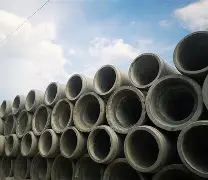
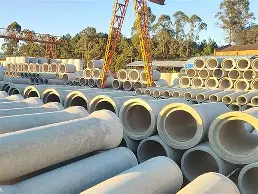
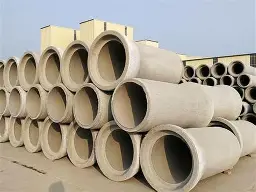
It is a type of special concrete pipe with high toughness and resistance to cracking, suitable for harsh mechanical environments that are difficult for standard concrete pipes to handle.
Key Features: By incorporating randomly distributed steel fibers, the concrete’s resistance to cracking, toughness, and impact fatigue performance are significantly enhanced, thereby altering its inherent brittle nature.
Key advantages: Exceptional resistance to cracking and limitation of cracking, outstanding impact resistance and wear-resistance properties, capable of effectively withstanding dynamic loads and deformations.
Typical applications: Suitable for scenarios requiring high resistance to cracking and impact, such as culverts under heavy vehicle traffic, mining and tunnel engineering, pipelines in areas with ground subsidence, and certain military facilities that require explosion protection.
High rupture resistance and rupture limitation
Steel fibers can effectively inhibit the plastic contraction of concrete and the development of microcracks caused by loading, significantly improve the initial crack strength, and disperse the cracks into fine cracks, greatly improving the resistance of the structure.
Excellent resilience and impact resistance
Steel fibers transform concrete from a brittle material to a composite with significant plasticity. It can absorb a large amount of impact energy, and the shock fatigue performance of comparable concrete is increased several to tens of times.
Excellent bending and pruning performance
The bridging effect of fibers enhances the tensile resistance of the tube and improves tensile performance, suitable for sites that are subjected to complex stresses and dynamic loads.
Strong wear and fatigue resistance
Steel fibers improve surface wear resistance and are suitable for the transport of particulate fluids or for wear-prone environments such as mine transport. Cracks expand slowly under circulating loads and have a long fatigue-resistant life.
Resistance to freezing and improved temperature resistance
Fiber restraint can reduce peeling and damage caused by the freezing cycle; Its high temperature resistance is better than that of synthetic fibers, and it can still maintain some residual strength at high temperatures.
High design flexibility
The performance can be customized to meet specific engineering needs by adjusting the fibre mixing (usually 0.5-2% volumetric mixing), length and type.
Partly replace or reduce steel rebar
In some secondary strengthening structures or in complex shapes of pipes, traditional steel mesh can be partially replaced and the production process can be simplified.
Application
Scenarios requiring high impact resistance: culverts under heavy vehicle traffic, drainage pipes for airport runways.
Key projects for crack resistance and seepage prevention: pipelines in areas prone to ground subsidence, and pipeline galleries in the aeration zones of sewage treatment plants.
Special requirements for wear resistance and corrosion resistance: pipelines for the transportation of industrial slurry and water-based sand blasting.
Specifications
Typical Specification Parameters
Dimension
Common Range
Remarks
1. Nominal Inner Diameter (DN)
DN300 – DN3000 mm (Common range)
Larger diameters (e.g., >4000 mm) are customizable.
Wide diameter range, customizable per project needs. Small to medium diameters are often used for culverts and manholes; large diameters for tunnels and major drainage.
2. Effective Length
1 m, 2 m, 2.5 m, 3 m
Standard pipe section lengths for ease of transportation and installation.
3. Pressure Class
Gravity Flow (Non-pressure) – Low Pressure (0.1-0.6 MPa)
Some designs can reach medium pressure (>0.6 MPa).
Primary advantage lies in crack/impact resistance, not high-pressure capacity. Pressure rating must be determined based on reinforcement (if any) and fiber design.