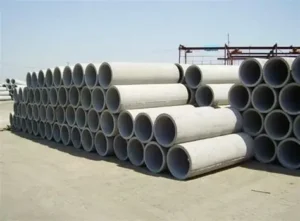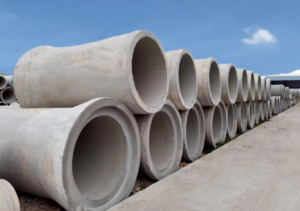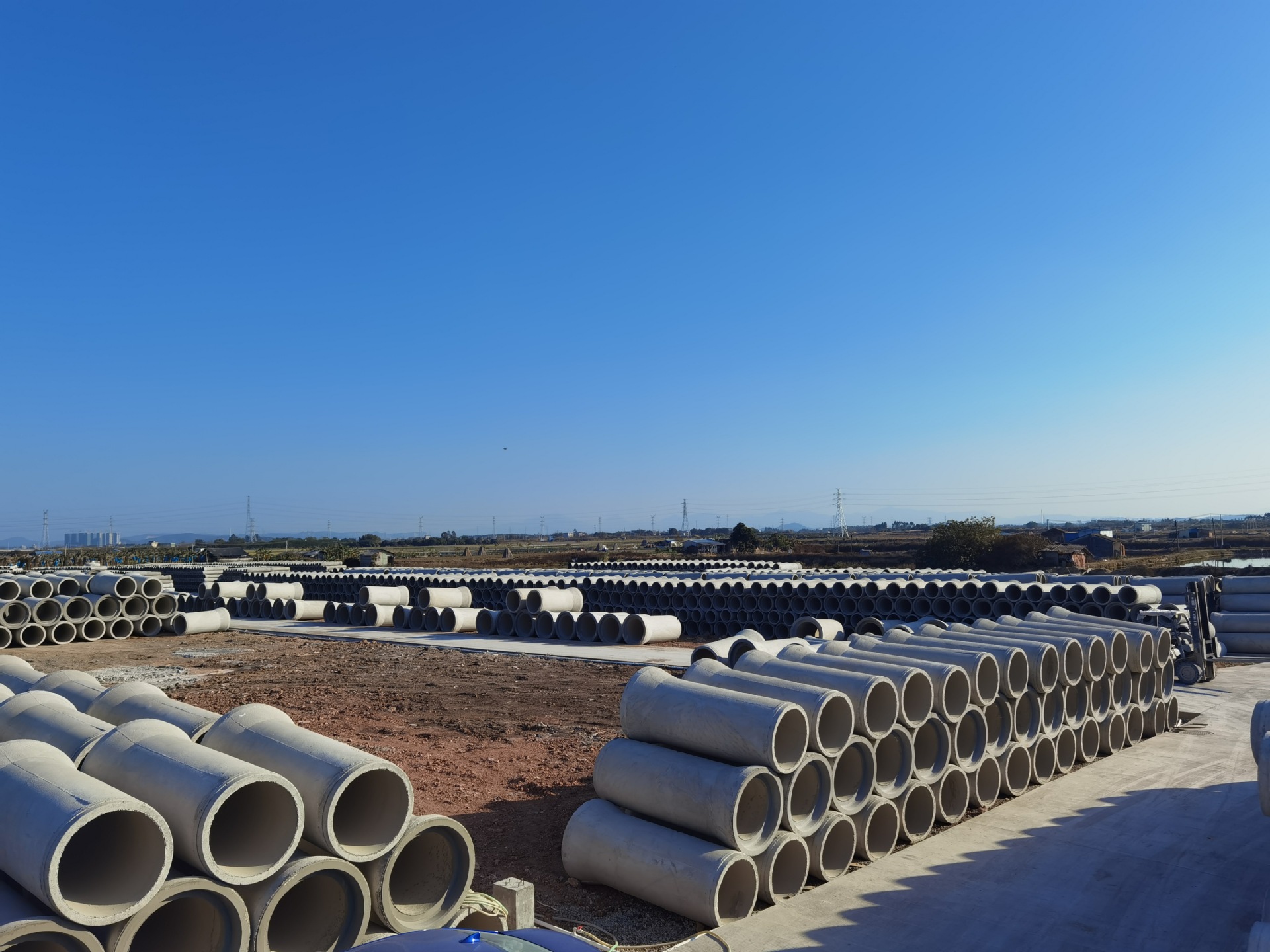
The Ultimate Guide to Concrete (Cement) Pipes: Types, Standards, Applications & Selection
This article provides a s
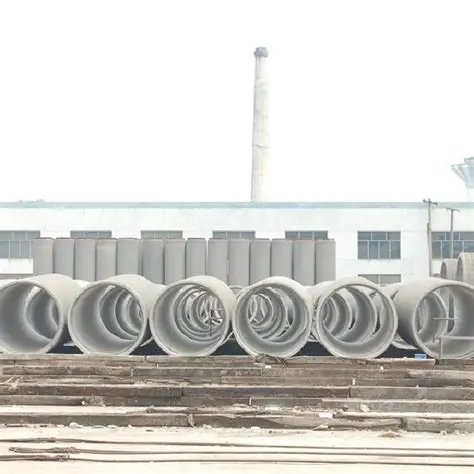
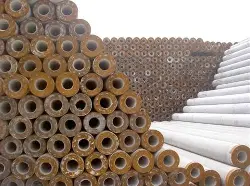
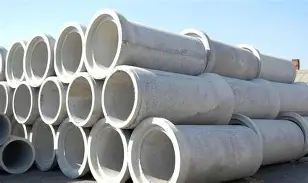
Our Prestressed Concrete Pipe Channel provides various-shaped pipes, including cylindrical prestressed concrete pipes. Contact us now!
The core difference lies in the”prestressing”process.High-strength steel wires are tensioned before the concrete is cast,placing the pipe body in a state of compression before it even bears internal pressure.This significantly enhances its crack resistance,impermeability,and load-bearing capacity,enabling its use in large-diameter,high-pressure water transmission mains—a capability ordinary concrete pipes lack.
It is specifically designed for large-diameter, high-pressure water transmission scenarios. It is one of the preferred pipe materials for urban water supply trunk lines, large-scale water diversion projects, power plant circulating water pipelines, and high-pressure agricultural irrigation systems. It is generally not used for gravity-flow drainage or low-pressure branch lines.
Employs core prestressing techniques to ensure superior pressure-bearing capacity and crack resistance.
Implements national and industry high standards with full-process monitoring, guaranteeing the safety and reliability of every pipe.
Utilizes high-grade cement, precision-rolled prestressing wires, and specialized additives to ensure strength and durability from the source.
Offers optimized design and scaled production, delivering a full lifecycle cost solution characterized by long service life and low maintenance.
High Pressure Resistance – Withstands high internal/external pressure (typically 0.4–2.0+ MPa), ideal for major water transmission lines.
Long Service Life – Designed to last over 50 years with minimal maintenance.
Excellent Seepage Resistance – Dense structure and sealed joints ensure reliable leak resistance.
Wide Applicability – Suitable for large-diameter, high-pressure water supply, diversion, and industrial projects.
Serves as the backbone pipeline for urban water supply networks, providing excellent pressure-bearing capacity for stable, long-distance water transmission.
Used in cross-regional, large-diameter water transfer and diversion projects that require high-pressure water conveyance.
Suitable for high-pressure transport of industrial water, such as circulating cooling water and process water in power plants and chemical plants.
Employed in pumped sewage and stormwater drainage systems where internal water pressure must be withstand.
It has a strong pressure-bearing capacity. Common working pressure ratings range from 0.4 MPa to 1.2 MPa, or even higher, depending on pipe diameter, reinforcement design, and standards. During selection, the pressure class must be determined based on the project’s design working pressure, soil cover depth, and surface loads.
It primarily uses flexible bell-and-spigot joints with rubber gaskets. During installation, a specially designed rubber gasket is placed between the spigot and bell ends; the thrust force during jointing compresses it, creating an elastic seal. When installed according to specifications and with a properly prepared foundation, the seal is highly reliable, allowing for minor deflection and movement without leakage.
Thanks to the high-strength steel wires being protected by concrete, it offers excellent durability with a typical design service life of over 50 years. Although the initial unit cost may be higher than some other pipe materials, its long lifespan, minimal maintenance requirements, and stable long-term hydraulic performance result in very high overall cost-effectiveness throughout the lifecycle of large water transmission projects.

This article provides a s


Looking ahead, the concre
From a decision-makerR

CTP is a cost-effective p

Fiber-reinforced concrete