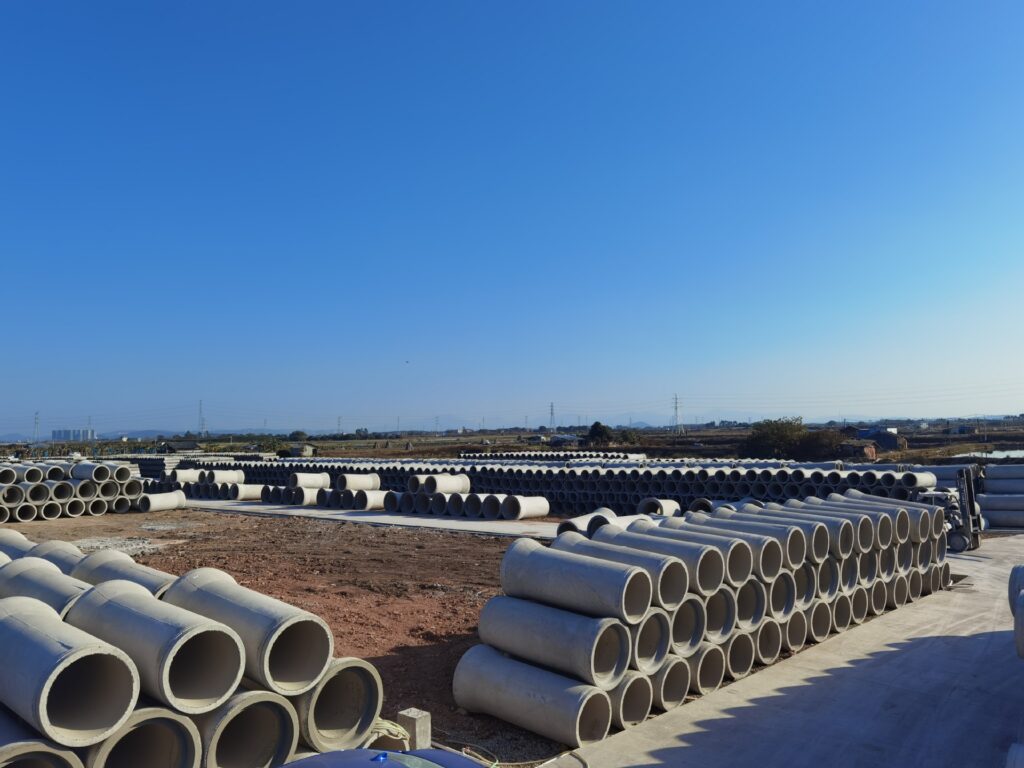
This article provides a systematic breakdown of everything about concrete pipes, from core definitions and cement mortar lining technology to industry challenges and cutting-edge innovations, offering you a complete decision-making roadmap from understanding to procurement.
Abstract
Concrete pipes, often referred to as cement pipes, are indispensable “underground arteries” in modern urban infrastructure, widely used in critical areas such as drainage, water conveyance, and culverts.
Faced with numerous pipe types and technical terms on the market, how does one make an informed choice? This article serves as your systematic ultimate guide.
We will first clarify the basic concepts, delve into various concrete pipe types—including cement mortar lined pipes—and standard dimensions, then explore their core advantages, non-negligible application challenges, and the latest technological innovations. Finally, we will guide you through the complete decision-making process, from knowledge building to market procurement.
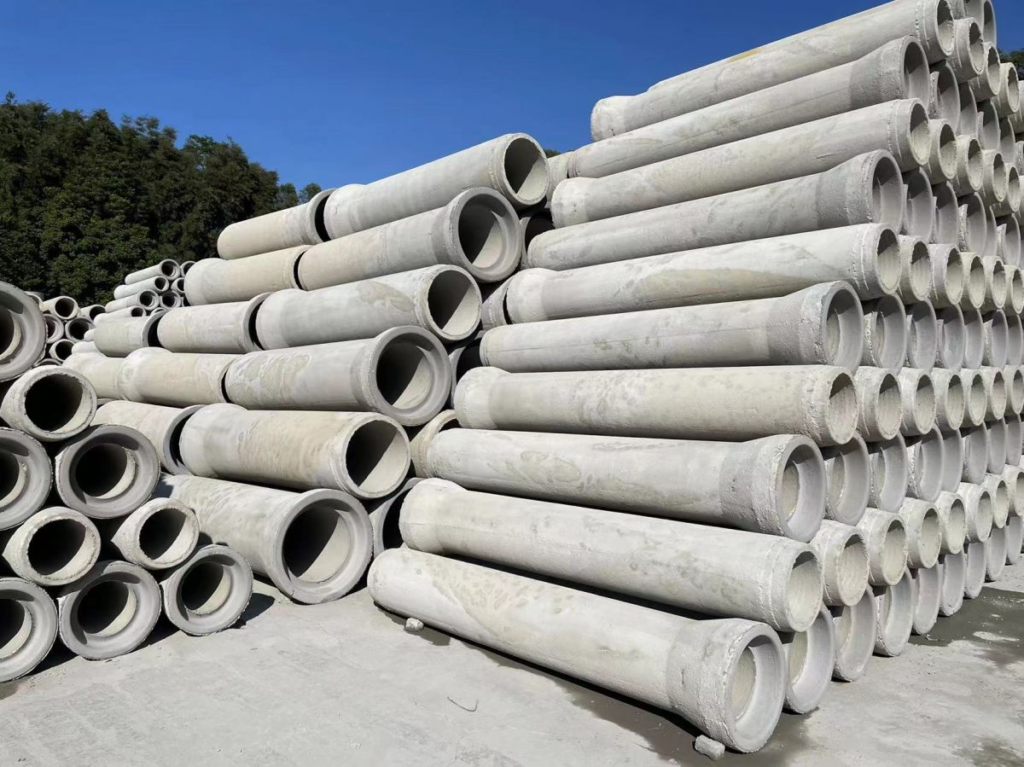
Part 1: What is a Concrete Pipe?
1.1 Core Definition and Material Clarification
The terms “concrete pipe” and “cement pipe” are often used interchangeably in daily conversation. However, strictly speaking, cement specifically refers to the powdered hydraulic cementitious material (e.g., Portland cement), while concrete is a composite material formed by mixing and hardening cement, sand, aggregate, and water in specific proportions.
Therefore, what we commonly call a “cement pipe” should accurately be named a “concrete pipe.” This material combination grants the pipe high compressive strength, durability, and good chemical corrosion resistance, making it an ideal choice for heavy-duty, long-term buried environments.
1.2 Main Components and Manufacturing Process Overview
The main components of a standard concrete pipe include: Portland cement (binding agent), clean sand and gravel (aggregate), water, and possible admixtures (e.g., water reducers, accelerators). The primary manufacturing processes are:
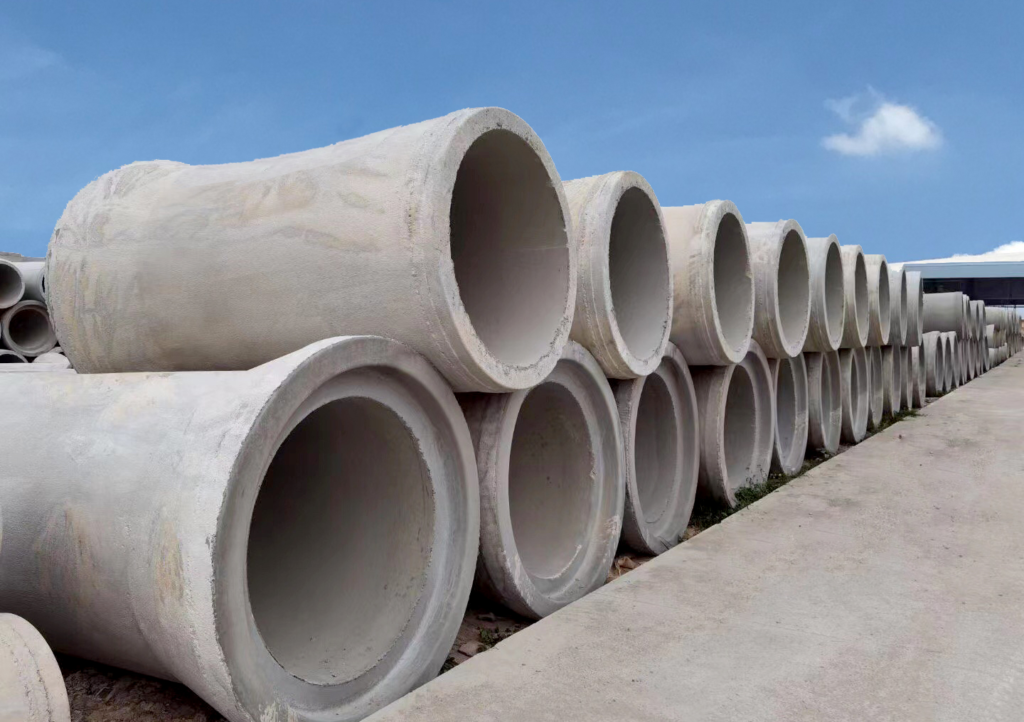
- Centrifugal Casting: Concrete mix is poured into a high-speed rotating steel mold. Centrifugal force compacts the mix and forms the hollow pipe body. Pipes produced this way have a dense structure and high strength.
- Roller Suspension / Vibration Compaction: Concrete in the mold is compacted by roller pressure or external vibration. Suitable for large-diameter or special-shaped pipes.
The realization of these processes relies on core equipment—the concrete pipe making machine. Its automation and precision directly determine the quality of the final product.
Part 2: How to Choose the Right Type?
2.1 Main Types of Concrete Pipes
Based on structural reinforcement and function, concrete pipes are mainly categorized as follows:
- Reinforced Concrete Pipe (RCP): Steel reinforcement is embedded within the concrete to withstand internal and external pressures. This is the most common type, used for most drainage and low-pressure water conveyance applications.
- Prestressed Concrete Pipe (PCP): High-strength steel wires or strands are tensioned before the concrete sets, creating pre-compressive stress within the pipe wall, enabling it to withstand higher internal pressure. Primarily used for pressure water mains.
- Prestressed Concrete Cylinder Pipe (PCCP): A steel cylinder is embedded within a concrete core, wrapped with prestressed wire, and coated with a mortar exterior. It offers one of the highest pressure ratings among concrete pipes and is used for large water transmission projects.
- Functional Pipes:
- Cement Mortar Lined Pipe: A layer of cement mortar is firmly applied to the inner wall of a standard concrete or steel pipe. This is a core focus of the search, used primarily for corrosion protection, friction reduction, water quality protection, or rehabilitation of old pipes.
- Other Lined Pipes: Such as epoxy-lined pipes for extreme corrosion environments.
2.2 Standard Dimensions and Specifications
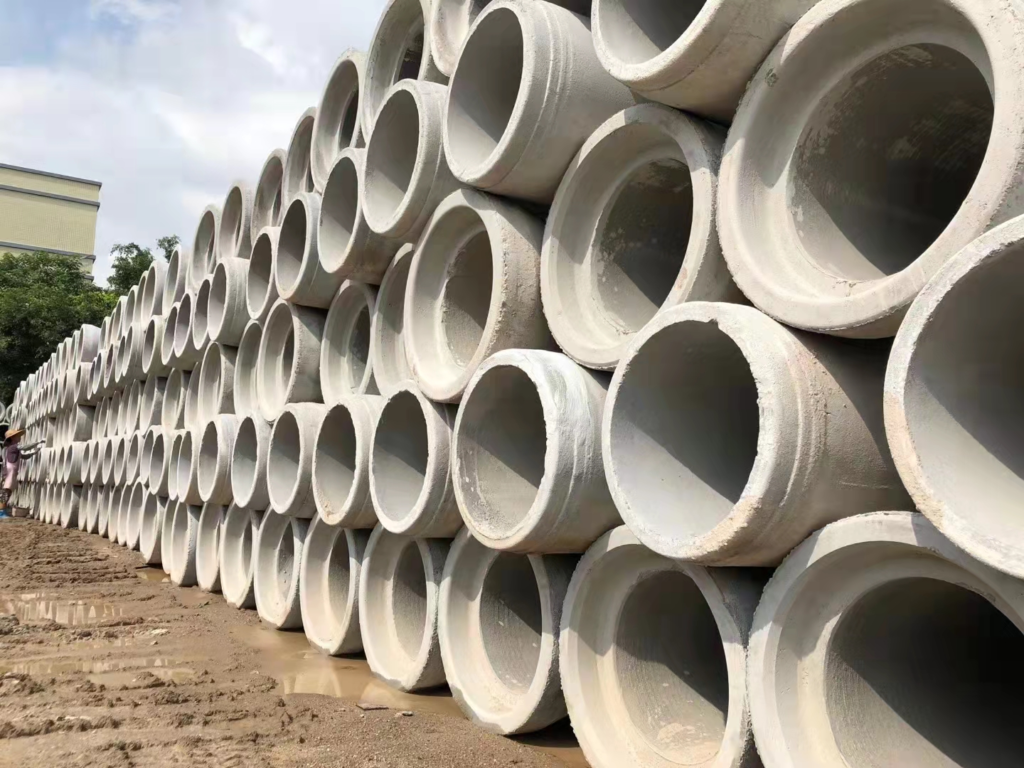
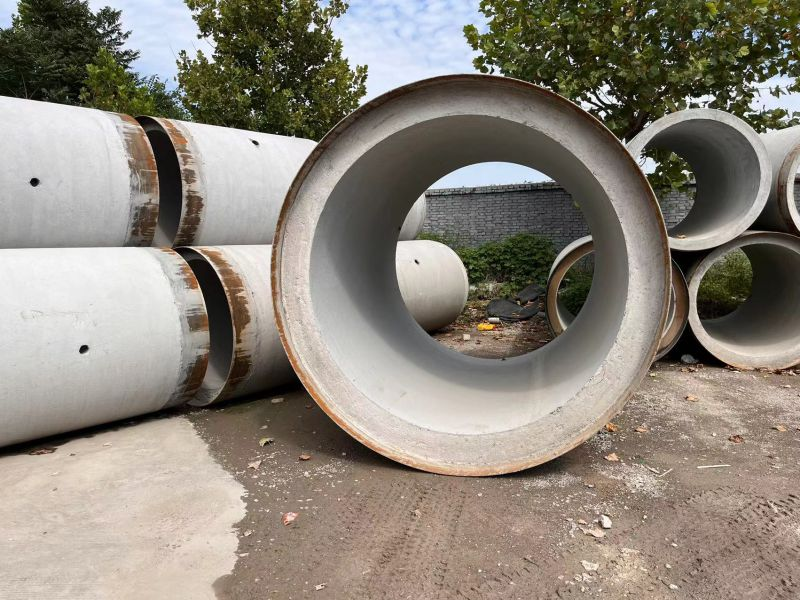
Concrete pipe dimensions are highly standardized. Common nominal internal diameters range from DN150 to DN3000 or larger. Standard lengths are usually 2 meters, 2.5 meters, or 4 meters per section.
When selecting size, engineers must determine it through rigorous calculation based on design flow, hydraulic gradient, burial depth, and external loads (traffic load, earth pressure). There is no single answer to “What are the standard dimensions for concrete pipes?”; it must be based on the engineering design.
Part 3: Why Choose Concrete Pipes?
- Exceptional Service Life & Durability: Design service life typically exceeds 50 years, with many cases reaching a century. It offers excellent resistance to weathering, UV radiation, and most soil corrosion.
- Superior Load-Bearing Capacity: Can withstand deep earth cover loads and heavy dynamic traffic loads, making it the preferred choice for deep burial applications.
- Excellent Fire Resistance & High-Temperature Performance: Concrete is non-combustible and does not release toxic fumes in a fire, far outperforming plastic pipes.
- Full Lifecycle Economy: Although the initial investment may be higher than some plastic pipes, its extremely low maintenance requirements and ultra-long service life often result in the lowest total cost of ownership.
- Environmental Friendliness: Raw materials are widely available, the production process has relatively low energy consumption, and the pipes themselves are recyclable.
Part 4: Cement Mortar Lining and Lining Systems
4.1 What is a Cement Mortar Lined Pipe? Why is it Needed?
A cement mortar lined pipe is created by forming a dense, smooth, and strongly adherent cement mortar coating on the internal wall of a metal pipe (mainly ductile iron or steel) or concrete pipe via centrifugal casting, spraying, or troweling.
Its core value lies in:
- Superior Corrosion Protection: Isolates the conveyed medium (especially corrosive wastewater or soft water) from the pipe metal, preventing rust and extending pipe life by decades.
- Water Quality Protection: The food-grade mortar layer prevents metal ions from leaching into potable water, ensuring safety.
- Friction Reduction: The smooth lining lowers the fluid friction coefficient (Hazen-Williams C factor can exceed 140), improving flow capacity and saving pumping energy.
- Rehabilitation of Old Pipes: Can be used for trenchless rehabilitation of in-service pipes, offering economic efficiency.
4.2 Construction and Application of Cement Lined Pipe Systems
A complete cement lined pipe system includes lining material (specific ratio of cement and graded sand), professional application equipment, and processes. The key to construction lies in surface preparation (cleaning, descaling), quality control of lining placement/spraying, and adequate wet curing.
The pipe cement lining machine, used for field or factory application, is the core equipment for this process. This system is mainly applied in:
- Municipal potable water transmission mains
- Industrial circulating water and wastewater discharge pipelines
- Mine tailings slurry pipelines
- Rehabilitation and upgrading of existing metal pipelines
Part 5: Application Scenarios and Selection Guide
5.1 Typical Application Fields
- Municipal Engineering: Storm and sanitary sewer systems, road culverts.
- Water Conservancy Projects: Reservoir intake/outlet pipes, agricultural irrigation channels.
- Transportation Infrastructure: Drainage culverts under highways and railways.
- Utility Tunnels: Used as protective casing for power and communication cables.
5.2 How to Select Based on Project Requirements?
Selection is a systematic process, following this decision path:
- Define Function: Is it for drainage, water conveyance, pressure resistance, or cable protection?
- Assess Environment: What is the soil corrosivity? What is the pH of the conveyed medium?
- Calculate Parameters: Determine the required internal diameter, working pressure, and external load class.
- Choose Type:
- For general gravity flow drainage, select Reinforced Concrete Pipe (RCP).
- For medium to high-pressure water transmission, select Prestressed Concrete Pipe (PCP) or PCCP.
- For conveying corrosive media or where high water quality is required, cement mortar lined pipe must be selected.
- Weigh Costs: Consider the initial purchase cost, installation cost, and total lifecycle maintenance cost.
Part 6: Challenges and Considerations in Using Concrete Pipes
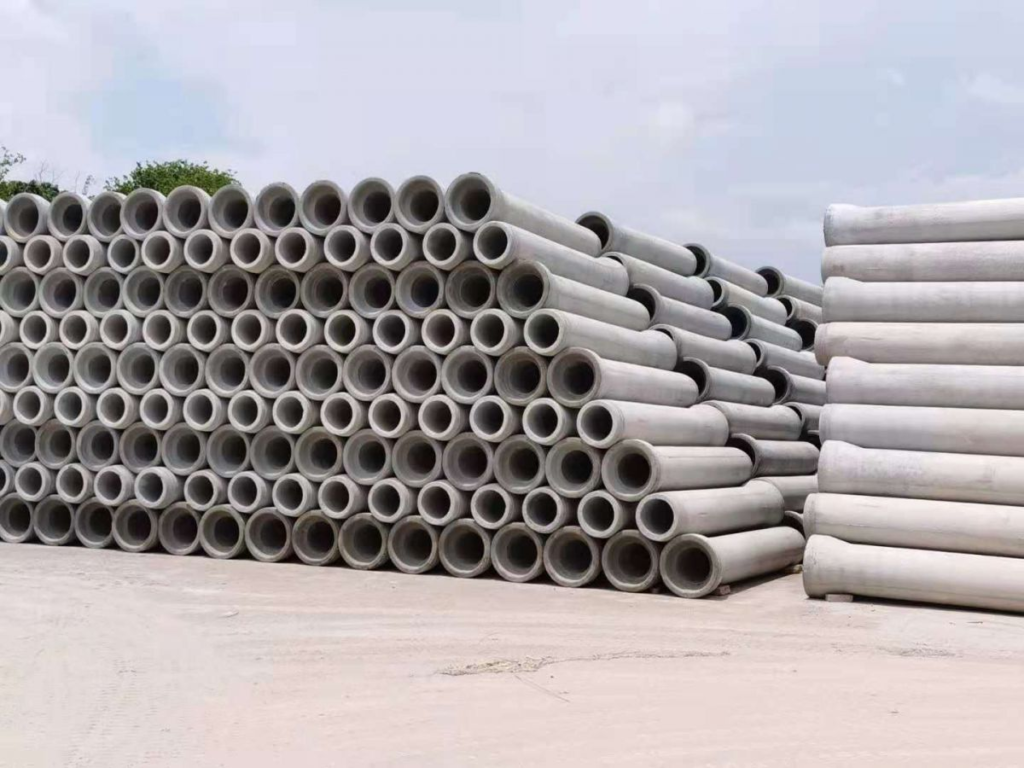
- Weight & Logistics: Significant weight requires heavy machinery for handling and transport, increasing the complexity and cost of field operations.
- Brittleness & Installation Precision Requirements: Impact resistance is inferior to flexible pipes, requiring care to prevent damage during transport and installation. Joint treatment (e.g., rubber gasket sealing for bell-and-spigot joints) demands high precision; improper installation can lead to later leakage.
- Limitations of Traditional Plain Concrete: Long-term exposure to acidic soils or high sulfate environments, or conveying industrial wastewater with very low pH, can erode concrete. This is precisely the problem addressed by cement mortar lining or more advanced corrosion protection measures.
- Manufacturing & Delivery Lead Time: Large diameter or special specification pipes require custom production, leading to longer lead times that must be factored into project planning.
Part 7: Technological Innovations in Concrete Pipes
To address the above challenges, the industry is continuously innovating:
- Material Science Revolution:
- The application of Ultra-High Performance Concrete (UHPC) allows pipe wall thickness to be reduced by 30%-50%, significantly lowering weight while multiplying strength and durability.
- Extensive use of industrial by-products (e.g., fly ash, slag) to replace part of the cement, producing “green concrete pipes” with a lower carbon footprint.
- Smart Manufacturing & Quality Control:
- Intelligent upgrades to concrete pipe making machines, integrating sensors and AI algorithms for real-time monitoring and automatic adjustment of tension and compaction during production, ensuring zero-defect quality.
- Lining & Joint Technology Upgrades:
- High-performance polymer-modified mortar linings with greater toughness, crack resistance, and chemical erosion resistance.
- Dual-seal bell-and-spigot systems provide redundant sealing security, greatly reducing the risk of joint leakage.
- Installation Method Innovations:
- Perfect integration with trenchless technologies like pipe jacking and microtunneling, minimizing disruption to surface traffic and the environment.
Part 8: Procurement and Market Considerations
8.1 Finding Suppliers and Assessing Product Quality
When searching for “concrete pipe making machines” or preparing to procure pipes, focus on:
- Supplier Qualifications: Possession of necessary production licenses, quality system certifications (e.g., ISO 9001).
- Product Compliance: Whether products comply with authoritative standards like GB/T 11836 (Concrete and Reinforced Concrete Drainage Pipes), ASTM C76, etc.
- Test Reports: Request third-party test reports for strength, external load capacity, internal water pressure, and lining quality (if applicable).
- Project Portfolio: Review the supplier’s successful track record in similar projects.
8.2 Frequently Asked Questions
- Q: Which is better, concrete pipes or HDPE dual-wall corrugated pipes?
- A: There is no absolute better or worse, only different suitable applications. Concrete pipes have clear advantages in scenarios requiring deep burial, high loads, long service life, and high stability; HDPE pipes perform better in shallow burial, seismic resistance, rapid installation, and resistance to acidic corrosion. For large trunk mains, concrete pipes remain the undisputed cornerstone.
- Q: How to determine if cement mortar lining is needed?
- A: A simple rule: Lining is mandatory when the conveyed medium is potentially corrosive to plain concrete or metal, or when high standards for water quality are required. It is often a compulsory specification in projects involving industrial wastewater, desalinated water conveyance, or raw water transmission.
Conclusion
Concrete pipes, with their inherent strength, durability, and economy, have stood the test of a century and remain the backbone of global infrastructure. Despite challenges like weight, brittleness, and corrosion in specific environments, continuous innovation through cement mortar lining and advancements in UHPC materials and smart manufacturing is constantly expanding their performance boundaries.
For decision-makers, the key to success lies in systematic understanding: comprehending their types and standards, weighing their advantages and challenges, discerning the latest technological innovations, and ultimately making the most scientific and economical choice based on specific project needs, environmental conditions, and total lifecycle cost. This guide serves as your reliable map to begin this systematic decision-making process.
References & Further Reading
1. Core Standards & Specifications
- Chinese National Standards:
- GB/T 11836-2009 Concrete and Reinforced Concrete Drainage Pipes
- GB/T 19685-2017 Prestressed Concrete Cylinder Pipe
- International & Foreign Standards:
- ASTM International Standards:
- ASTM C76 Standard Specification for Reinforced Concrete Culvert, Storm Drain, and Sewer Pipe
- ASTM C361 Standard Specification for Reinforced Concrete Low-Head Pressure Pipe
- EN 1916:2002 Concrete pipes and fittings, unreinforced, steel fibre and reinforced
- BS 5911 Precast concrete pipes, fittings and ancillary products
- ASTM International Standards:
2. Authoritative Industry Bodies & Professional Organizations
- American Concrete Pipe Association (ACPA): Technical resources on design, installation, linings (e.g., Concrete Pipe Design Manual, technical bulletins).
- China Concrete and Cement Products Association (CCPA): Industry reports, technical guidelines.
- American Water Works Association (AWWA): Standards for concrete pressure pipe (e.g., AWWA C300, C301, C302, C303) and cement-mortar lining (AWWA C104/A21.4).
3. Academic & Engineering Knowledge Bases
- Textbooks & Design Manuals: e.g., Water and Wastewater Engineering Structure Design Manual, Concrete Products Technology.
- Academic Databases & Journals: CNKI, Wanfang Data (Chinese); Elsevier (ScienceDirect), ASCE Library (International). Research on UHPC, fiber reinforcement, corrosion, and rehabilitation.
- Leading Manufacturer Literature: Technical manuals, case studies, and white papers from major global and domestic producers provide practical specifications and solutions.