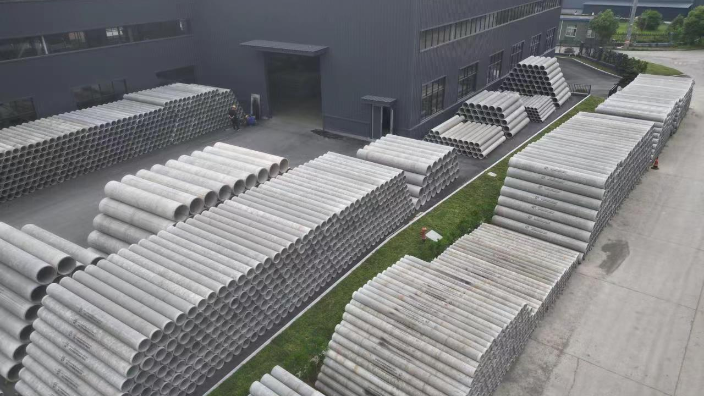
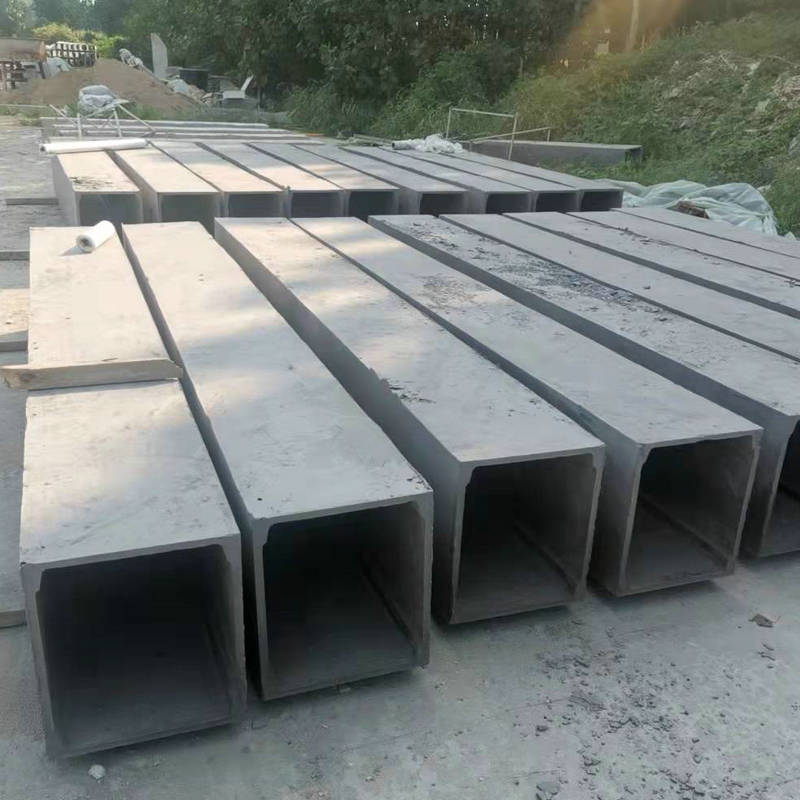
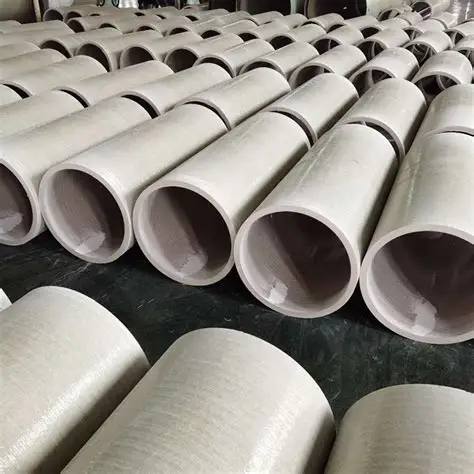
It is a high-performance, asbestos-free fiber-cement pipe, characterized by its exceptional toughness and durability. It excels in terms of overall performance among synthetic fiber-cement pipes, making it particularly suitable for engineering applications requiring rigorous corrosion resistance and crack resistance.
Excellent mechanical properties: PVA fibers have extremely strong adhesion to the cement matrix, significantly enhancing the ductility, crack resistance, and impact resistance of the pipes, and effectively inhibiting the formation and growth of cracks.
Excellent durability: The fibers are highly resistant to alkali, remain stable in alkaline cement environments, and possess excellent resistance to ultraviolet aging, wear, and freeze-thaw cycles, resulting in a long service life.
Comprehensive corrosion resistance: It exhibits excellent resistance to acids, bases, salts, and other chemical media, as well as soil corrosion. It is suitable for harsh environments such as industrial wastewater and coastal areas.
Environmental Protection and Safety: Completely free of asbestos and classified as a green building material. It also possesses non-conductive and flame-retardant properties.
Performance
Excellent mechanical properties and toughness
High toughness and crack resistance: PVA fibers and cement substrates are bonded by chemical bonds, and the bonding strength is extremely strong, which greatly improves the tensile and bending strength of the material, and effectively inhibits the generation and expansion of microcracks.
High shock resistance: The bridging of fibers allows the material to absorb a lot of energy before it is destroyed, and the shock and fatigue resistance is far superior to that of concrete and some other fiber-reinforced concrete.
Excellent long-term durability
Excellent alkaline resistance: PVA is one of the few organic fibers that can maintain stability in the cement high-alkaline environment for a long time, and is not easily corroded, ensuring the durability of the strengthening effect.
Frost resistance and wear resistance: Fiber networks can effectively limit the peeling and cracking caused by the frost cycle, while improving the wear resistance of the surface of the pipe wall.
Comprehensive resistance to chemical corrosion
It has strong resistance to chemical media such as acid, alkali, salt and electrochemical corrosion in soil, and is especially suitable for harsh corrosion environments such as industrial waste water and coastal saline land.
Excellent physical and environmental properties
Environmental safety: completely free of asbestos and safe in the production and use process.
Low thermal conductivity and flame retardancy: The thermal conduction rate is low and the material is non-combustible.
Size stability: The fiber has low hygroscopicity, low swelling and drying rate, and good size stability.
Application
High-standard municipal drainage and industrial sewage pipelines.
Cable protection pipes with high requirements for flexibility and resistance to cracking.
Underground pipelines in corrosive areas such as coastal regions and saline-alkali soils.
Pipes in areas subject to dynamic loads or ground subsidence.
Specifications
Typical Specification Parameters
| Parameter | Common Range | Description & Features |
|---|---|---|
| 1. Nominal Inner Diameter (DN) | DN150 – DN1500 mm (Customizable) | Primarily covers small to medium diameters. Pipes below DN600 are commonly used for cable protection and building drainage; those above DN600 are often used for high-standard municipal and industrial wastewater applications. |
| 2. Effective Length | 2 m, 3 m, 4 m (Standard) | Standard lengths facilitate transportation and installation. Non-standard lengths can be customized for special projects. |
| 3. Pressure Rating | Gravity Flow (Non-pressure) – Medium-Low Pressure (≤0.8 MPa) | Positioned as a medium-low pressure, high-performance pipe. Its advantages lie in toughness, crack resistance, and corrosion resistance, not ultra-high pressure capacity. Working pressure must be determined based on structural design. |
| 4. Fiber Parameters | Type: High-modulus PVA fiber; Length: 6-12 mm (common); Dosage: Volume dosage 0.8% – 2.0% (Key variable) |
Core of performance. The PVA fiber dosage directly determines the toughness grade, crack resistance, and ultimate tensile performance. Higher dosage yields better performance but also significantly increases cost. |
| 5. Joint Type | Bell-and-Spigot + rubber gasket seal (Most common); Plain End + matching steel/polymer coupling seal; Flanged Joint (for equipment connection). |
The bell-and-spigot flexible joint can accommodate minor settlement, offers reliable sealing, and allows quick installation. |
| 6. Wall Thickness | Designed based on diameter and load, typically 20mm – 70mm | Determined by structural calculation to meet stiffness, external load, and long-term durability requirements. The reinforcing effect of PVA fibers allows for moderate wall thickness optimization under equivalent performance demands. |